
Understanding the Impact of AI
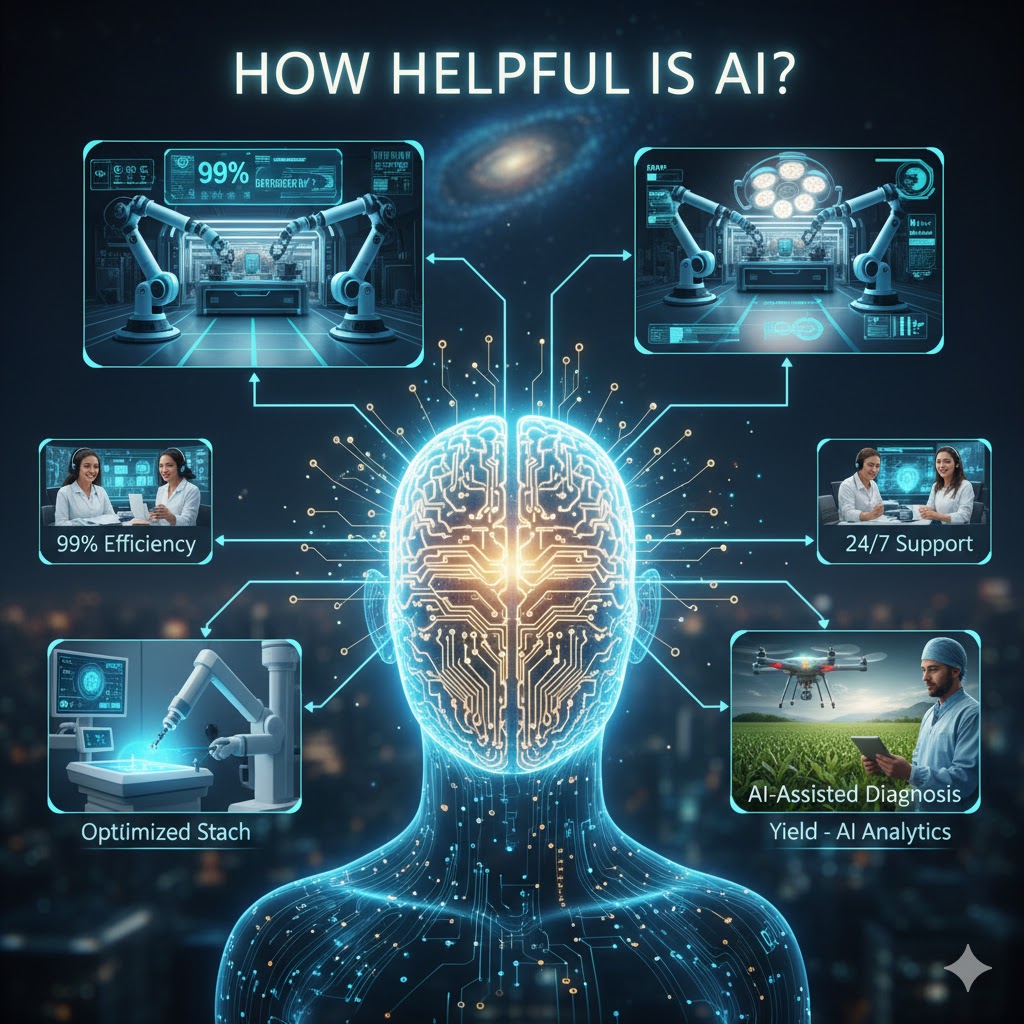
Artificial Intelligence (AI) has become one of the most powerful and transformative technologies in the modern world. It is reshaping how we work, learn, communicate, and solve problems. From smartphones to large-scale business systems, AI is deeply integrated into everyday life. Its ability to analyze data, automate tasks, and make intelligent decisions makes it an essential tool for improving efficiency and productivity. As AI continues to advance, its helpfulness becomes even more evident across various fields.
AI in Everyday Life
AI plays a major role in simplifying daily tasks for millions of people. Smart assistants like Siri, Google Assistant, and Alexa help users manage schedules, set reminders, answer questions, and control household devices. These tools not only save time but also create a more convenient living environment.
AI also enhances entertainment and browsing experiences. Streaming platforms such as Netflix and YouTube use AI algorithms to recommend movies, shows, and videos based on viewing history. Social media platforms rely on AI to filter content, detect spam, and personalize user feeds. Navigation apps like Google Maps and Waze use AI to analyze real-time traffic, offering the fastest routes and improving travel efficiency.
How AI Supports Businesses
Businesses are among the biggest beneficiaries of AI technology. AI allows companies to automate repetitive tasks such as customer service, data entry, and inventory management. Chatbots, powered by AI, provide instant responses to customer questions, improving satisfaction and reducing workload for human staff.
AI also plays a critical role in data analysis. Companies use AI to study customer behavior, predict buying trends, and create more effective marketing strategies. With AI’s ability to process large amounts of data quickly and accurately, businesses can make smarter decisions and improve overall performance. This leads to higher productivity, reduced costs, and increased competitiveness.
AI in Healthcare
The healthcare industry has been transformed by AI. Doctors and medical professionals use AI tools to analyze medical images, identify diseases, and create personalized treatment plans. AI helps detect illnesses like cancer earlier and with greater accuracy, potentially saving lives.
Wearable devices powered by AI track heart rate, sleep patterns, and physical activity, giving users valuable insights into their health. Hospitals use AI systems to manage patient records more efficiently and reduce human error. These improvements make healthcare more accurate, accessible, and efficient.
AI in Education
AI is also extremely helpful in education. Intelligent learning platforms personalize lessons based on each student’s strengths and weaknesses. Students receive tailored practice exercises, instant feedback, and recommendations to improve their skills.
Teachers benefit as well. AI can automate grading, track student progress, and assist with lesson planning, allowing educators to focus more on teaching and student engagement rather than administrative tasks.
Challenges and Responsible AI Use
Although AI offers many benefits, it also raises concerns about privacy, bias, and job displacement. Responsible use of AI is essential to ensure fairness and safety. Clear guidelines and ethical practices can help organizations use AI in a transparent and trustworthy way.
Conclusion
AI is incredibly helpful in everyday life, business, healthcare, and education. Its ability to automate tasks, improve decision-making, and enhance efficiency makes it one of the most valuable technologies of our time. When used responsibly, AI will continue to shape a better, smarter, and more innovative future for everyone.







3 comments
https://shorturl.fm/KYBvA
https://shorturl.fm/g1nwi
https://shorturl.fm/pjNKG